
The Quiet Power of Restraint: A Branding Strategy Analysis of Aesop
In a beauty industry crowded with loud claims, celebrity endorsements, and trend-chasing aesthetics, Aesop stands apart by doing something deceptively simple: it stays quiet. Founded in Melbourne in 1987, Aesop has built one of the most distinctive global branding strategies in modern skincare—not by shouting louder than competitors, but by speaking more thoughtfully. Its success is not accidental. It is the result of a disciplined, coherent branding philosophy that touches every detail, from product formulation to retail architecture and even the language on its labels.
This article explores how Aesop’s branding strategy works, why it feels so different, and what other brands can learn from its deliberate restraint.
Brand Positioning: Intellectual Luxury Over Accessible Glamour
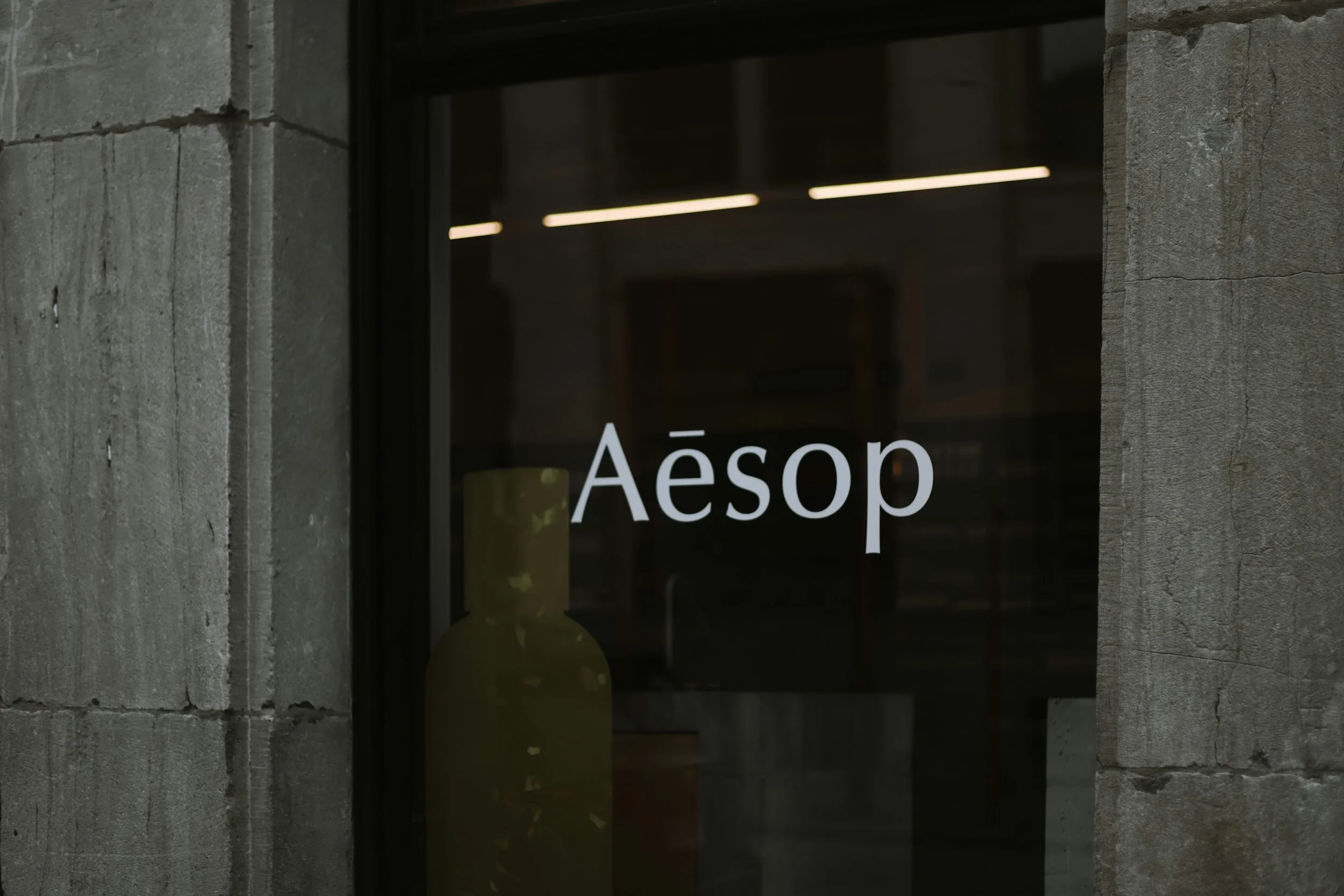
Aesop positions itself in a rare space between luxury and accessibility. Its products are priced at a premium, yet the brand avoids traditional luxury cues such as gold accents, glossy finishes, or overt status signaling. Instead, Aesop aligns itself with intellectual luxury—a form of value rooted in knowledge, discernment, and cultural depth.
Rather than promising instant beauty or miracle results, Aesop emphasizes formulation integrity, botanical science, and long-term skin health. This appeals to a consumer who wants to feel informed, thoughtful, and intentional in their choices. Buying Aesop is less about indulgence and more about self-respect and personal standards.
Strategic insight:
Aesop doesn’t sell aspiration through fantasy; it sells aspiration through intelligence.
Visual Identity: Radical Consistency as Differentiation
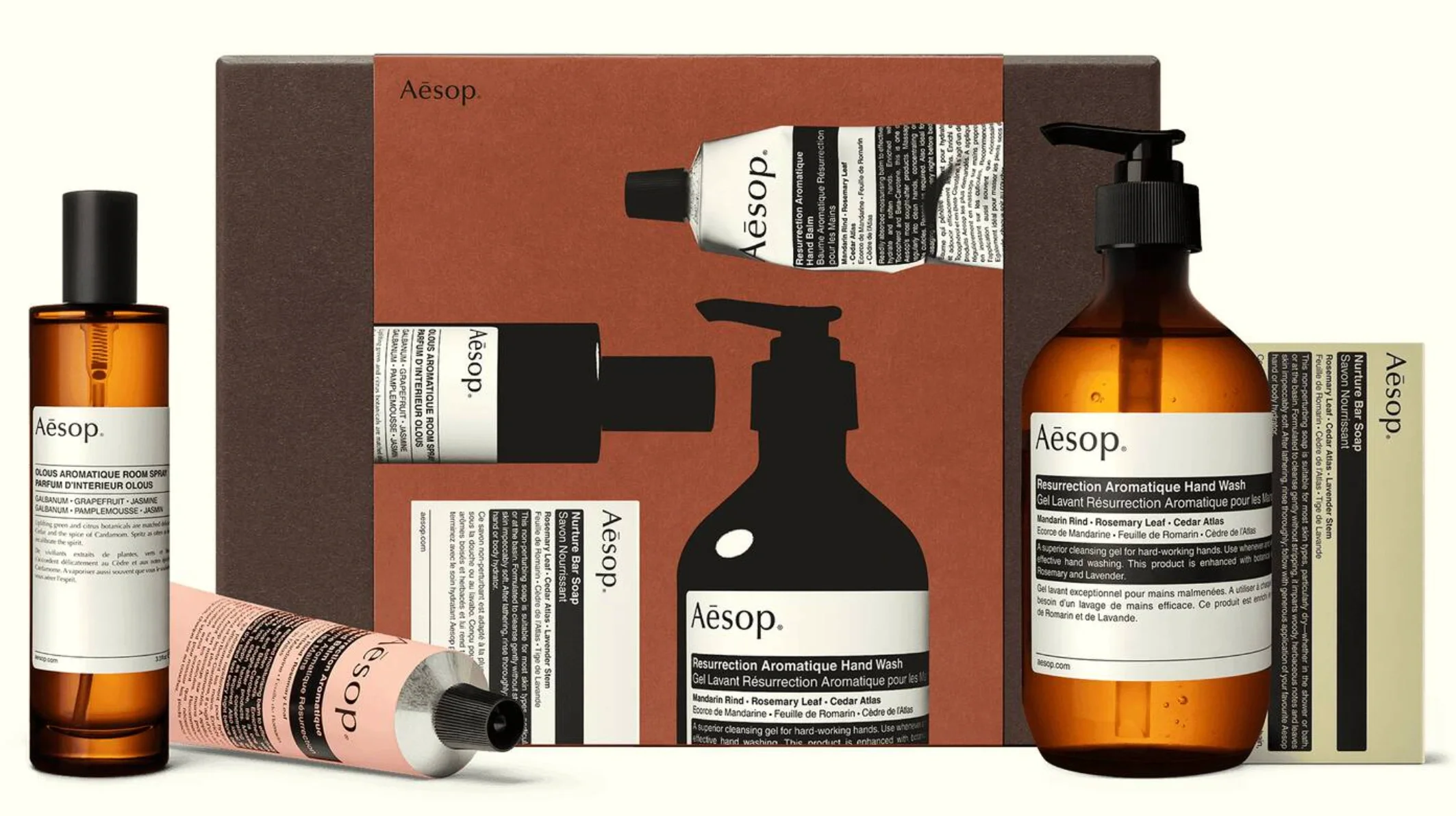
Aesop’s visual identity is famously restrained: amber bottles, monochrome labels, utilitarian typography, and muted retail interiors. This consistency has become one of its strongest assets.
In a market where competitors constantly refresh packaging to follow trends, Aesop’s refusal to visually evolve creates instant recognizability. The brand looks the same in Tokyo, Paris, or Sydney—not because it lacks creativity, but because it understands that consistency builds trust.
Importantly, this aesthetic signals seriousness. The packaging resembles apothecary bottles rather than cosmetic containers, subtly reframing skincare as a ritual of care rather than decoration.
Strategic insight:
When everyone competes for attention, visual restraint becomes a competitive advantage.

Retail as Cultural Expression, Not Just Distribution
One of Aesop’s most distinctive branding moves is its approach to physical retail. Each store is designed in collaboration with local architects and designers, drawing inspiration from the surrounding neighborhood’s history, materials, and cultural context.
Despite the shared brand DNA, no two Aesop stores are identical. This creates a sense of discovery and respect for place—an idea that resonates strongly with culturally literate consumers.
However, this localization never compromises brand coherence. The materials may change, but the tone remains unmistakably Aesop: calm, contemplative, and human-scaled.
Strategic insight:
Aesop treats retail not as a sales channel, but as a cultural dialogue.

Verbal Identity: Language as a Brand Asset
Aesop’s copywriting is arguably as iconic as its packaging. Product descriptions are articulate, slightly literary, and often philosophical. Ingredients are explained with care, without oversimplification or exaggerated claims.
This linguistic confidence assumes intelligence on the part of the customer. Aesop never talks down, never uses slang, and never relies on empty marketing buzzwords. As a result, its voice feels trustworthy and timeless.
The brand’s avoidance of aggressive calls to action—“Buy now,” “Limited time only”—further reinforces its calm authority. Aesop behaves as though it does not need to persuade, only to explain.
Strategic insight:
Respecting your audience’s intelligence is a powerful form of brand loyalty.

Marketing Strategy: Absence as Intentional Presence
Unlike most global beauty brands, Aesop does not rely heavily on influencers, celebrity ambassadors, or mass advertising campaigns. Its marketing presence is selective, editorial, and often understated.
This scarcity creates intrigue. When Aesop does appear—whether in a carefully chosen publication or a thoughtfully written campaign—it feels intentional rather than intrusive.
In branding terms, Aesop understands the power of absence. By choosing not to participate in noise-heavy platforms, it reinforces its identity as a brand for those who seek, not those who scroll mindlessly.
Strategic insight:
Not being everywhere can be more powerful than being visible everywhere.

Brand Values: Ethics Without Performance
Sustainability, ethical sourcing, and responsible production are integral to Aesop’s operations. Yet the brand rarely foregrounds these values in a performative way. There are no loud declarations, no moral grandstanding.
Instead, ethics are embedded quietly into the brand’s behavior—recyclable packaging, cruelty-free formulations, and long-term supplier relationships. This understated approach aligns perfectly with Aesop’s overall philosophy: substance over spectacle.
Strategic insight:
True brand values don’t need to be announced—they need to be practiced consistently.

What Other Brands Can Learn from Aesop
Aesop’s branding success offers several lessons:
Clarity beats novelty. A strong point of view, executed consistently, outperforms constant reinvention.
Tone is strategy. Visuals, language, and behavior must align to create a believable brand world.
Less can be more. Restraint, when intentional, signals confidence.
Respect builds loyalty. Treating consumers as intelligent partners fosters long-term trust.

Conclusion: The Confidence to Be Quiet
Aesop’s branding strategy succeeds because it understands something many brands forget: differentiation is not about being louder, faster, or trendier. It is about being clearer.
By committing to intellectual depth, aesthetic restraint, cultural sensitivity, and quiet integrity, Aesop has built a brand that feels timeless in an industry obsessed with the next new thing. Its success proves that in a noisy world, calm can be revolutionary—and silence, when well designed, can speak volumes.
